
You might have noticed that lights seem harsher at night, colors look less crisp, or reading has become a little more tiring than it used to be. At first, it can feel easy to brush off. Maybe you blame age, dry eyes, or a need for new glasses. Then the changes keep showing up, and that uncertainty can be hard to sit with. If you are wondering what happens during a cataract check, the short answer is this: an Eye doctor in McLean looks at how your vision has changed, examines the lens inside your eye, checks the health of the rest of your eye, and helps you decide whether new glasses, monitoring, or surgery makes the most sense.
That process is often more reassuring than people expect. A cataract evaluation is not just about finding a cloudy lens. It is about understanding how much that clouding is affecting your daily life and ruling out other eye problems that can cause similar symptoms. When you know what to expect, the appointment can feel less intimidating and more useful.
What does an eye doctor look for during a cataract evaluation?
Cataracts usually develop slowly, which is part of what makes them confusing. You may adapt without realizing it. You drive a little less at night. You hold books closer to the lamp. You stop wearing certain colors because they do not look the same. Because of this slow change, an eye doctor cataract evaluation starts with your experience, not just a machine or a chart.
Your doctor will ask about blurred vision, glare, halos around lights, faded colors, double vision in one eye, and trouble with daily tasks. That matters because cataracts are treated based on symptoms and function, not only on how they look in an exam. If your vision seems only mildly changed on paper but driving feels unsafe, that is important.
After that, the exam usually includes vision testing. You may read an eye chart to measure how clearly you see at different distances. Refraction may also be done, which is the test that checks whether a new glasses prescription improves your sight. Sometimes a prescription change helps enough for a while. Sometimes it does not, which gives the doctor another clue that the lens itself is the issue.
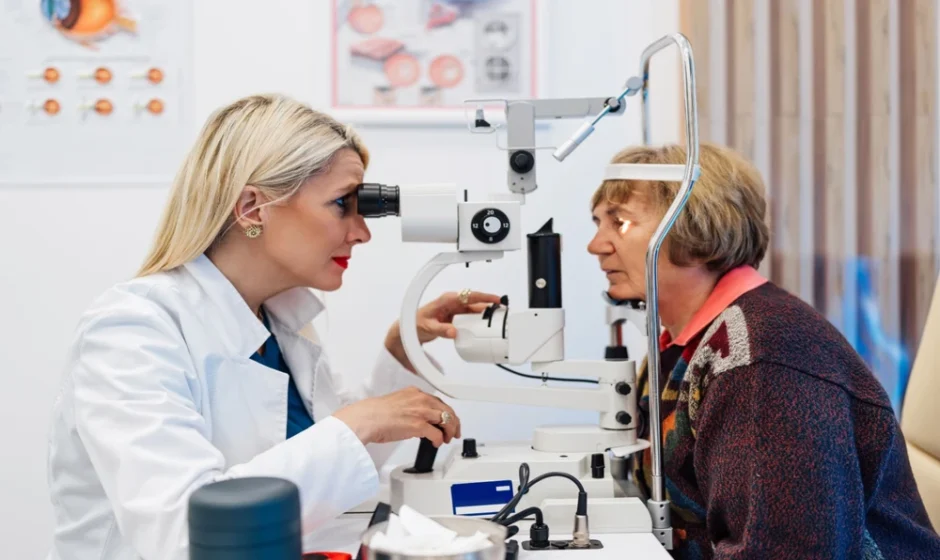
The doctor then examines the front and back of your eye. A slit lamp exam uses a bright microscope to look closely at the cornea, iris, and lens. This is often where the cataract becomes visible. To get a fuller view, your eyes may be dilated with drops. If you have never had that done, the dilated eye exam is a standard part of seeing the retina and optic nerve well.
Why is that so important? Because not every vision problem is caused by cataracts alone. Macular degeneration, glaucoma, diabetic eye disease, and retinal problems can also affect sight. An eye doctor needs to know whether a cataract is the main cause of your symptoms or only part of the picture.
Why can the cataract exam process feel more layered than expected?
Many people assume the visit leads to a simple yes or no answer. Do you have cataracts or not? In real life, it is often more nuanced. You can have early cataracts that do not yet need surgery. You can have moderate cataracts that bother you a great deal because of your work or night driving. You can also have cataracts and another eye condition at the same time, which changes the conversation.
That is where the cataract exam process becomes more personal. Your doctor may ask what a normal day looks like. Do you spend hours on a screen? Do you sew, read, or drive after dark? Have you stopped doing things you enjoy because your vision feels unreliable? These details help shape treatment. Surgery is not based only on the appearance of the cataract. It is based on how much it interferes with your life.
If surgery is being considered, the doctor may discuss the next stage of testing. According to the Mayo Clinic overview of cataract diagnosis and treatment, this can include measurements of the eye to help choose the right lens implant. That step is usually done when the cataract has progressed enough that surgery is likely to help.
How does a cataract evaluation compare with the decisions that come after it?
So, where does that leave you after the exam? Usually in one of three places. You may only need updated glasses and follow up later. You may need monitoring because the cataract is present but not yet disruptive enough for surgery. Or you may be ready to talk seriously about treatment. The table below can help make those paths easier to sort out.
| What the doctor finds | What it may mean for you | Common next step |
|---|---|---|
| Mild lens clouding, vision improves with refraction | Symptoms may be manageable for now | New glasses, more light for reading, routine follow up |
| Cataract is present, glare or night driving is harder, glasses help only a little | Daily function is starting to be affected | Monitor closely and discuss timing for surgery |
| Clouding clearly limits reading, driving, or work, and no better prescription helps | Cataract is likely the main reason for vision loss | Surgical planning and lens measurements |
| Cataract plus another eye disease | Vision may improve with surgery, but expectations need care | Review full eye health and build a treatment plan |
For many people, hearing the word surgery brings a fresh wave of stress. That is understandable. It may help to know that cataract surgery is common, and the National Eye Institute explains how cataract surgery works, including removal of the cloudy lens and placement of a clear artificial lens. Knowing the steps often makes the idea feel less unknown.
What can you do right now if you think you need a cataract vision assessment?
Pay attention to patterns.
Write down what you are noticing before your appointment. Include when vision seems worse, whether glare is a problem, and which activities feel harder. A good cataract vision assessment depends in part on your day to day reality, so those details are worth bringing with you.
Bring your current glasses and your questions.
It sounds simple, but it helps. Bring your distance glasses, reading glasses, and a short list of concerns. Ask whether the cataract is mild, moderate, or advanced. Ask if a new prescription is likely to help. Ask whether anything else in the eye could be affecting your sight.
Think about function, not just numbers.
Many people focus only on the line they can read on the chart. That matters, but it is not the whole story. If you avoid driving at dusk, struggle with steps in dim light, or feel less confident at work, say so. A good discussion with your eye doctor should connect the exam findings to your real life.
When is it time to move from watching and waiting to treatment?
There is no single moment that fits everyone. Some people live comfortably with early cataracts for years. Others need help sooner because their work, safety, or independence is affected. The goal of a cataract evaluation is not to push you toward a decision. It is to give you a clear picture of what is happening and what your options are.
If your vision has changed and you are starting to wonder whether cataracts are part of the reason, it is worth getting checked. A careful exam can replace guesswork with answers, and that alone can bring some relief. When you understand the process eye doctors follow for cataract evaluations, the next step often feels much more manageable.